Peenguin: A Playful Handwritten Script Font for Small Business Branding
Two weeks ago, I was helping a local candle maker update her jar labels—her best-selling lavender-vanilla scent needed a fresh look for holiday markets. She’d been using a free Google Font that felt “too generic,” and customers kept telling her, “Your candles smell amazing—but the label doesn’t match the care you put into them.” That’s when I reached for Peenguin: a modern and playful handwritten script font that instantly added warmth, personality, and polish to her packaging. No redesign required—just swapping one font made her entire brand feel more intentional, cohesive, and human.
Peenguin for Handmade Product Labels and Craft Packaging
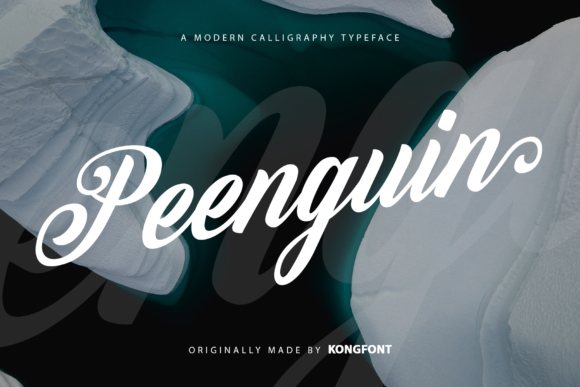
Peenguin shines brightest where authenticity meets craftsmanship—think candle jars, soap wraps, tea tins, or ceramic tags. Its gentle bounce, subtle contrast, and natural flow mimic real pen-on-paper movement, so it never feels stiff or digital. As a freebie, it’s especially valuable for small makers who need professional-looking fonts without licensing fees or subscription overhead. I tested it at 14pt on matte kraft paper labels—and yes, it held up beautifully. The letterforms stay legible even at smaller sizes, especially when used for product names (“Honey Lavender,” “Oat Milk + Sea Salt”) rather than long ingredient lists. For best results, pair Peenguin with a clean sans serif (like Montserrat or Poppins) for supporting text—this combo creates instant visual hierarchy and trust.
Peenguin in Photoshop and Silhouette Design Studio for Print-Ready Projects
If you’re using Peenguin for physical goods—whether printing custom stickers, cutting vinyl decals, or building layered mockups—you’ll appreciate how smoothly it integrates into industry-standard tools. I used Peenguin in Photoshop to refine a boutique’s gift tag design: adjusting tracking for tighter spacing, converting to outlines before export, and testing color overlays against kraft and blush pink stock. In Silhouette Design Studio, it cut flawlessly—no jagged edges or disconnected strokes—even on delicate flourishes like the lowercase “g” and “y.” As a freebie, Peenguin delivers commercial-grade performance without the premium price tag. Just double-check your file format (it typically includes .OTF and .TTF) and confirm it supports basic OpenType features like ligatures—these little details elevate your fonts from “cute” to “crafted.”
Peenguin for Social Media Graphics and Instagram Story Templates
Your Instagram feed is often the first impression customers have—and Peenguin helps your visuals stand out in a scrollable sea of uniform sans serifs. I helped a small-batch bakery refresh their weekly story templates using Peenguin for seasonal specials (“Pumpkin Cardamom Loaf — Baked Fresh Daily”). Its playful energy matched their joyful brand voice, while its consistent stroke weight ensured readability on mobile screens—even at thumbnail size. Because Peenguin is a handwritten script font, it adds approachability without sacrificing polish. Bonus: it pairs effortlessly with minimalist photo backgrounds, textured overlays, or soft watercolor elements—ideal for creators who want rich visual storytelling without heavy design work.
Peenguin for Thank-You Cards, Menus, and Customer-Facing Print Materials
There’s something quietly powerful about handwriting that says, “I see you—and I made this just for you.” Peenguin captures that feeling without requiring actual handwriting. A café owner I worked with used it for her laminated menu board headers (“Today’s Specials,” “Our Story”) and printed thank-you cards tucked into takeout orders. Customers noticed—not the font by name, but the *feeling*: friendly, unhurried, sincere. As a display font, Peenguin works best for short phrases, titles, and decorative accents—not body copy. For menus, keep it above 20pt; for thank-you cards, use it at 24–36pt with generous line spacing. And always test print on your final paper stock—some matte finishes mute fine details, but Peenguin’s sturdy terminals and open counters hold up better than many delicate script fonts.
Peenguin as a Logo Font and Brand Identity Anchor
Can you use Peenguin for a logo? Yes—but thoughtfully. Its personality is strong, so it’s ideal for brands built on warmth, creativity, and handmade charm: a pottery studio, a floral arrangement service, a wellness coach, or an indie stationery shop. I recently adapted it for a client’s monogram logo (first initial + last name), tweaking kerning to balance rhythm and recognition. Because Peenguin is a modern handwritten script font, it avoids looking dated or overly ornate—unlike some vintage scripts that clash with contemporary web layouts. That said, always convert to outlines before finalizing logos, and verify commercial licensing if you’ll apply it to merchandise or client projects. As a freebie, Peenguin gives you room to experiment risk-free—then scale confidently once you know it resonates with your audience.
Typography isn’t just decoration—it’s silent brand messaging. When your fonts reflect your values, your craft, and your care, customers feel it. Peenguin does exactly that: playful but purposeful, modern but warm, free but fully functional. Whether you’re updating a single label or building a full visual identity, this handwritten script font is a smart, joyful, and surprisingly strategic choice.